Bridging the Gap in Healthcare Communication

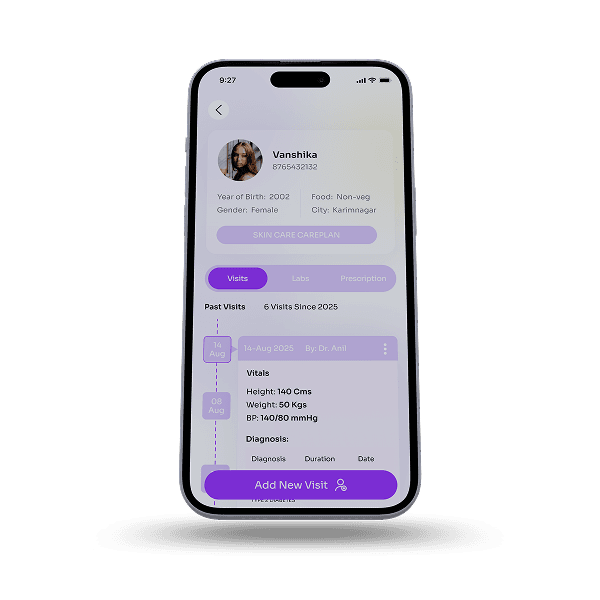
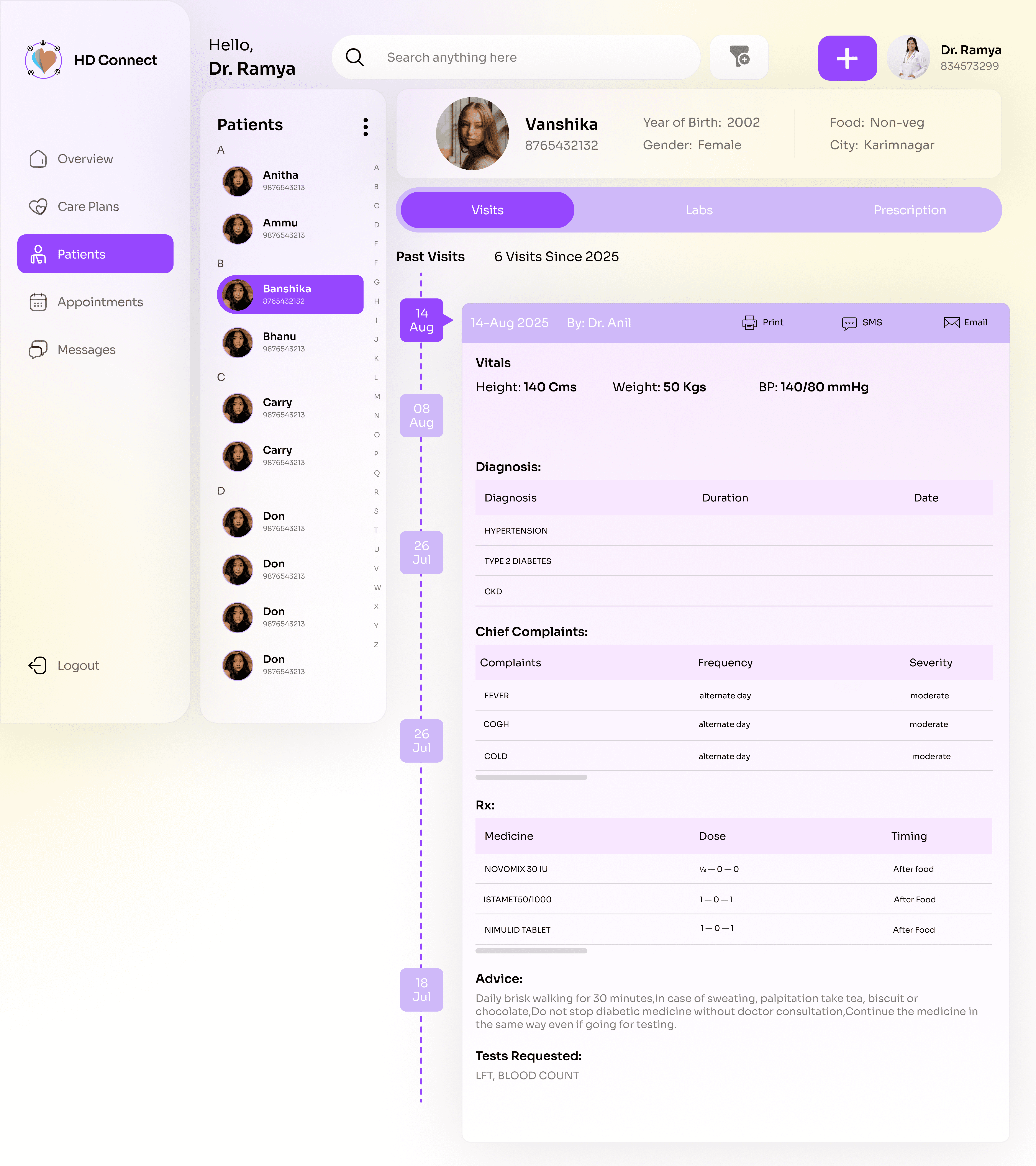
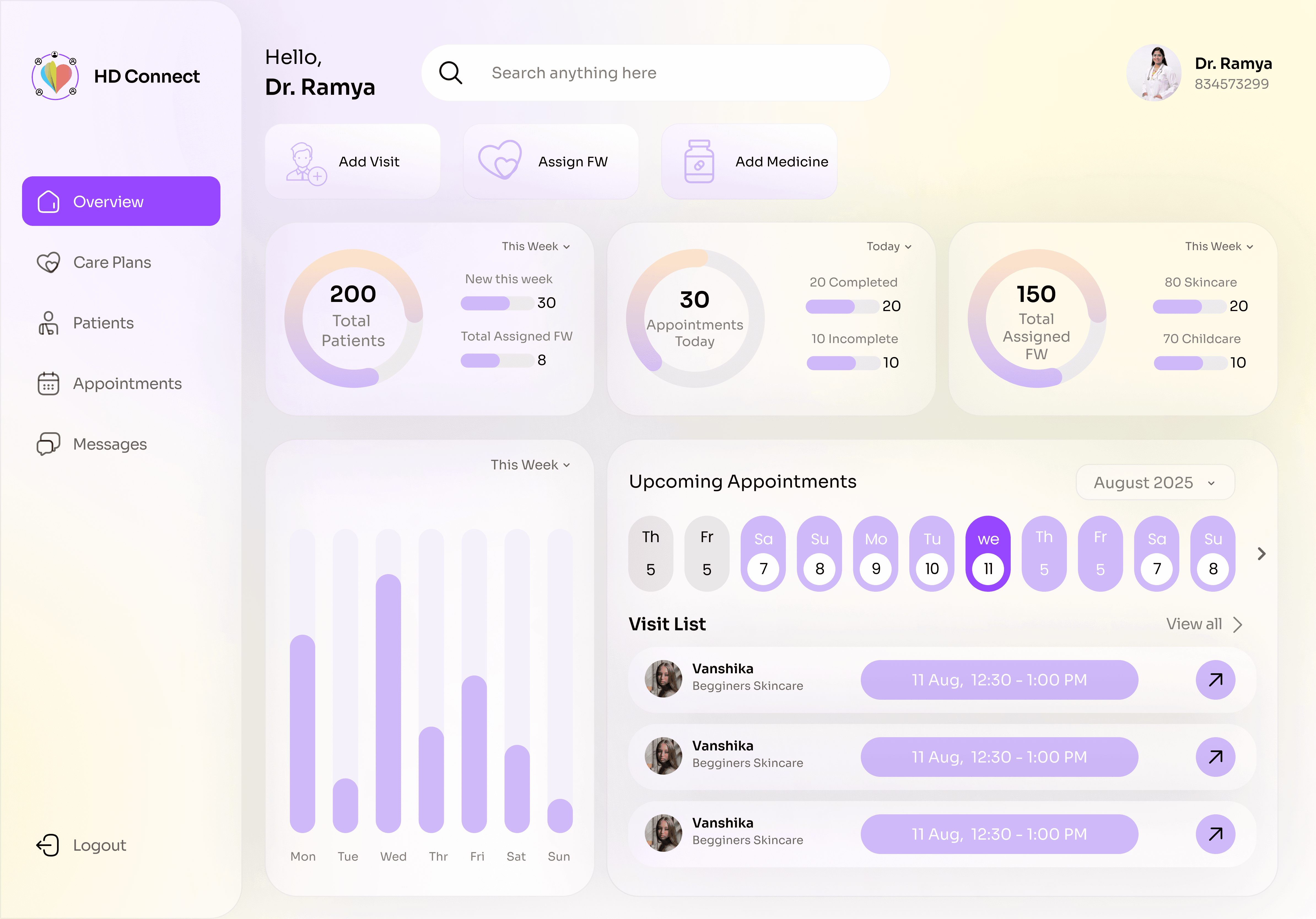
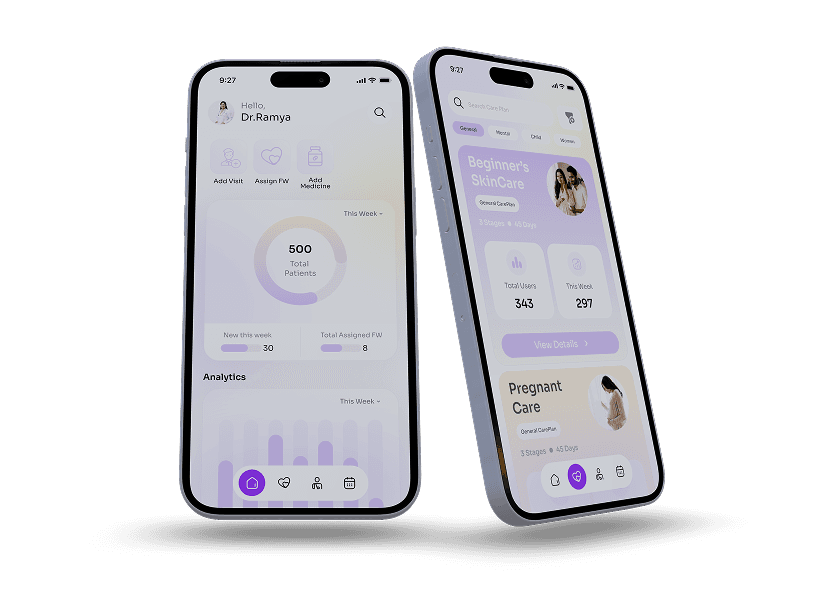
A complete redesign and launch of HD Connect, a patient-facing app that improves access to personalized care frameworks shared by doctors. The goal was to simplify health communication, make care plans more actionable, and empower patients with easy-to-follow guidance.
Headquarters

Headquarters

Karimnagar, Telangana, India

Founded

Founded

2025

Industry

Industry

HealthTech

Company size

Company size

20+

Challenge

Traditional healthcare apps often overload patients with medical data, making it hard for them to understand or follow through. Patients struggled to keep track of frameworks (e.g., pregnancy care, childcare, mental wellness), and there was a clear disconnect between doctors’ recommendations and patients’ daily application.

HD Connect needed to create a clear, simple, and engaging experience where patients could view doctor-assigned frameworks, track their progress, and feel guided instead of overwhelmed.

Results

The redesign of HD Connect resulted in:

  • 40% increase in patient adherence to frameworks.

  • 50% reduction in missed follow-ups.

  • Patients reported a 4.8/5 satisfaction rating on clarity and usability.

  • Doctors noted a 30% improvement in patient engagement with assigned care plans.

35%

Improved onboarding process

25%

Increase in user retention

84%

Increase in time spent on website
Process

Research & Analysis: We conducted interviews with both patients and doctors. Patients wanted simpler visuals and reminders, while doctors wanted clarity in patient tracking. Competitive research showed a lack of apps balancing both.


Information Architecture: We structured the app around the doctor–patient relationship:

  • Doctor assigns frameworks

  • Patient receives structured modules

  • Tracking & feedback loops

    This hierarchy reduced confusion and made the patient journey more intuitive.


Wireframing & Prototyping: Low-fidelity sketches were built to outline the user journey. We then created a high-fidelity prototype, incorporating guided steps, reminders, and progress dashboards.


Usability Testing: Usability tests with 20 patients across age groups revealed the need for bigger visuals, friendly colors, and simplified language. Doctors emphasized quick assignment tools. We refined the flow accordingly.


Visual Design & Style Guide: We designed a calm, trust-building interface with minimal distractions. Typography and icons were selected for accessibility. A consistent style guide ensured both doctors and patients shared the same visual language across devices.

Research & Analysis: We conducted interviews with both patients and doctors. Patients wanted simpler visuals and reminders, while doctors wanted clarity in patient tracking. Competitive research showed a lack of apps balancing both.


Information Architecture: We structured the app around the doctor–patient relationship:

  • Doctor assigns frameworks

  • Patient receives structured modules

  • Tracking & feedback loops

    This hierarchy reduced confusion and made the patient journey more intuitive.


Wireframing & Prototyping: Low-fidelity sketches were built to outline the user journey. We then created a high-fidelity prototype, incorporating guided steps, reminders, and progress dashboards.


Usability Testing: Usability tests with 20 patients across age groups revealed the need for bigger visuals, friendly colors, and simplified language. Doctors emphasized quick assignment tools. We refined the flow accordingly.


Visual Design & Style Guide: We designed a calm, trust-building interface with minimal distractions. Typography and icons were selected for accessibility. A consistent style guide ensured both doctors and patients shared the same visual language across devices.

Research & Analysis: We conducted interviews with both patients and doctors. Patients wanted simpler visuals and reminders, while doctors wanted clarity in patient tracking. Competitive research showed a lack of apps balancing both.


Information Architecture: We structured the app around the doctor–patient relationship:

  • Doctor assigns frameworks

  • Patient receives structured modules

  • Tracking & feedback loops

    This hierarchy reduced confusion and made the patient journey more intuitive.


Wireframing & Prototyping: Low-fidelity sketches were built to outline the user journey. We then created a high-fidelity prototype, incorporating guided steps, reminders, and progress dashboards.


Usability Testing: Usability tests with 20 patients across age groups revealed the need for bigger visuals, friendly colors, and simplified language. Doctors emphasized quick assignment tools. We refined the flow accordingly.


Visual Design & Style Guide: We designed a calm, trust-building interface with minimal distractions. Typography and icons were selected for accessibility. A consistent style guide ensured both doctors and patients shared the same visual language across devices.

Stack

Stack

Stack

Conclusion

The launch of HD Connect successfully bridged the gap between doctors and patients by focusing on clarity, accessibility, and trust. With higher patient adherence, improved communication, and increased satisfaction, HD Connect proves how thoughtful design in healthcare can deliver real-world impact.

Create a free website with Framer, the website builder loved by startups, designers and agencies.