The Power of User Personas in Design
User personas are semi-fictional characters representing your target audience, based on real research. They capture demographics, goals, behaviors, and pain points, helping teams design with empathy. Personas guide decisions across research, ideation, and testing, ensuring products meet real user needs and avoid one-size-fits-all solutions.
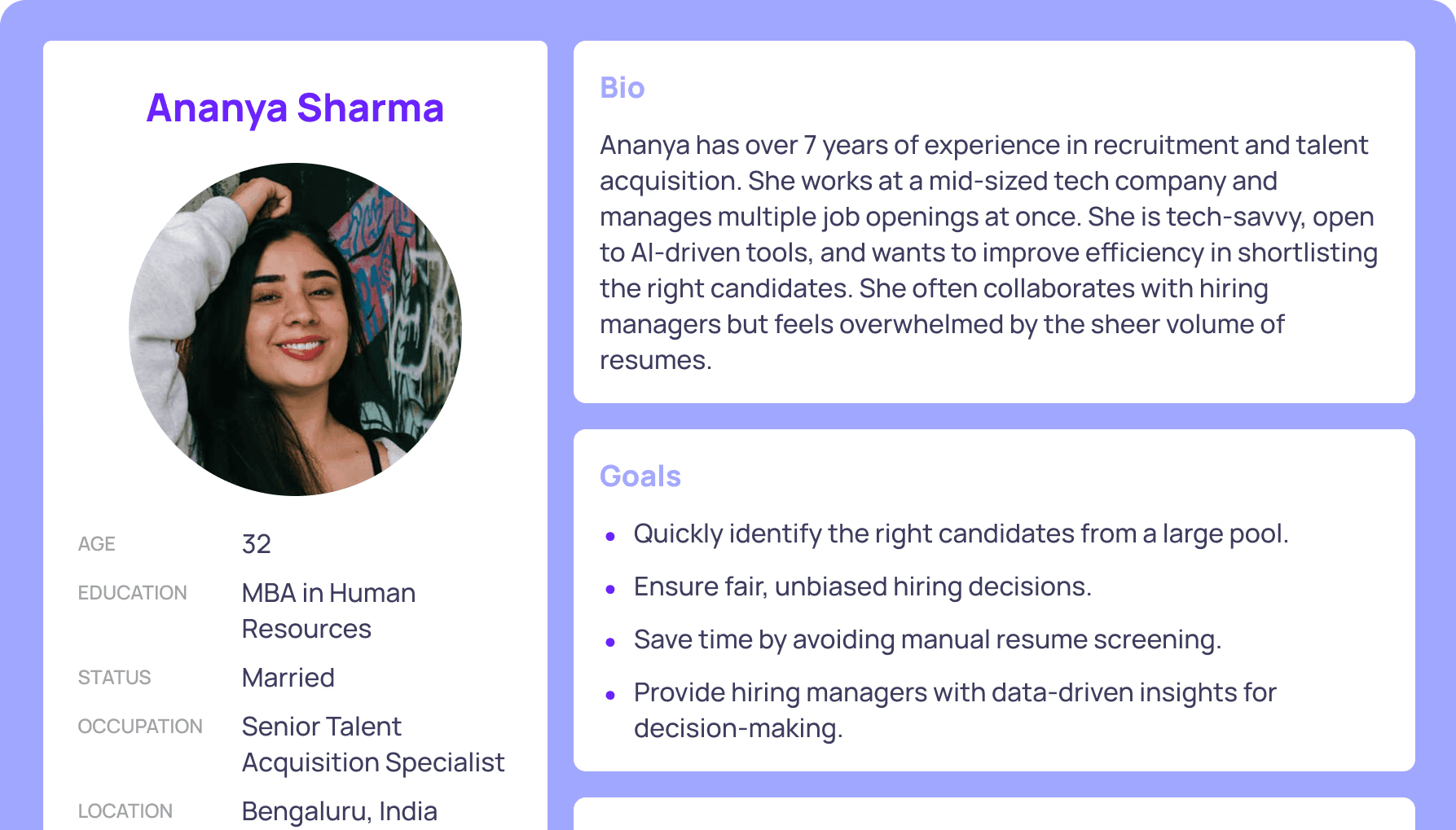
User personas are semi-fictional characters representing your target audience, based on real research. They capture demographics, goals, behaviors, and pain points, helping teams design with empathy. Personas guide decisions across research, ideation, and testing, ensuring products meet real user needs and avoid one-size-fits-all solutions.
Understanding the Basics
A user persona is a semi-fictional character created to represent your target audience. It’s built using real data from user research, including demographics, goals, behaviors, and pain points. Personas help designers and product teams align their decisions with the actual needs of users rather than assumptions.
For example, if you are designing a health-tracking app, creating personas such as “Ananya Sharma, a 28-year-old working professional seeking easy meal logging” or “Rohit Kumar, a 45-year-old diabetic patient managing multiple health reports” gives the team a clear direction.
Personas bring empathy into the process, ensuring that every design choice—whether a button placement, notification style, or feature priority—has a human-centered focus.
Practical Applications
User personas play a crucial role across different stages of design. In the research phase, they summarize insights into clear user groups. In the ideation phase, they help teams brainstorm features that matter most to those users. During the testing phase, personas act as a reference point, allowing teams to check whether the product actually meets the intended user’s expectations.
In practice, using personas helps prevent the “one-size-fits-all” trap in product design. Instead, it enables tailored solutions. For instance, a food scanning app might design different flows for quick snackers vs. health-conscious planners, both guided by personas.
Conclusion
User personas are not just documents; they are powerful storytelling tools. They ensure that your product speaks the language of its users, meets their needs, and solves real problems. By integrating personas into your workflow, you’re designing with clarity, empathy, and impact.